
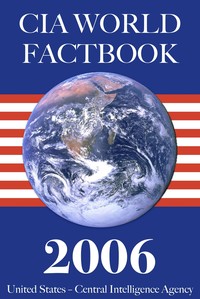
The 2006 CIA World Factbook by United States. Central Intelligence Agency
Let's be clear from the start: this isn't a novel. There's no plot twist on page 42. The 2006 CIA World Factbook is exactly what it says on the cover—a massive collection of data profiles for 267 world entities. Each entry is a structured breakdown of a country or territory, covering geography, people, government, economy, communications, transportation, military, and transnational issues. The 'story' is the state of the world in 2006, told through maps, flags, and countless statistics.
The Story
The book doesn't have a narrative in the traditional sense. Instead, it presents a global mosaic. You flip from reading about Afghanistan's nascent government and struggling economy to the booming tech sector in Ireland. You see China's explosive GDP growth numbers right next to details about its one-child policy. It captures moments in time: Iraq's entry is detailed amidst the ongoing conflict, and you can find the exact population estimate for New Orleans in the year after Hurricane Katrina. The 'plot' is the sheer scale and organization of global information, presented without commentary or analysis.
Why You Should Read It
This is where it gets fascinating. Reading this now is a pure exercise in context. It’s a baseline. You see the world as it was, not as we remember it. Comparing the data from 2006 to what we know today reveals incredible stories of change—the rise of renewable energy sources, shifting populations, economies that boomed and busted. It turns dry facts into a starting point for curiosity. Why was Lithuania's population declining so fast? What was the internet user count in Nigeria? The book doesn't answer the 'why,' but it powerfully frames the questions. It reminds you that history is made of specific, measurable conditions.
Final Verdict
This isn't for everyone. If you want a page-turner, look elsewhere. But if you're a curious person, a writer needing period detail, a history fan, or someone who loves data and maps, this is a treasure trove. It's perfect for trivia buffs, students working on decade-old projects, or anyone who wants to understand the 'before' picture of our 21st-century world. Think of it less as a book to read cover-to-cover and more as an endlessly browsable historical document. Dip in, get lost for an hour, and see what you discover.
Sandra Thompson
1 year agoThis is one of those stories where the character development leaves a lasting impact. Exactly what I needed.