A
Alejo
Guest
- Thread Author
- #1
Cracks in basement floor concrete are often a normal result of shrinkage, but the pattern matters. A dry, stable hairline crack is different from one that is wet, changing, offset, or appearing with wall movement. For Cleveland homeowners, the best first step is to document the crack and look for clues about moisture or movement.
The American Concrete Institute explains that concrete floor slabs shrink as they dry and cool, and that even well-designed floors can develop some cracking. That fact alone cannot explain a particular crack, so look at its location, condition, and changes over time.
Often, yes. A thin, dry crack that stays the same and lies flat on both sides can be consistent with normal slab shrinkage. Basement slabs commonly sit over prepared material and are separate from the foundation walls, but a floor crack deserves closer attention when it is wet, offset, growing, or paired with wall symptoms.
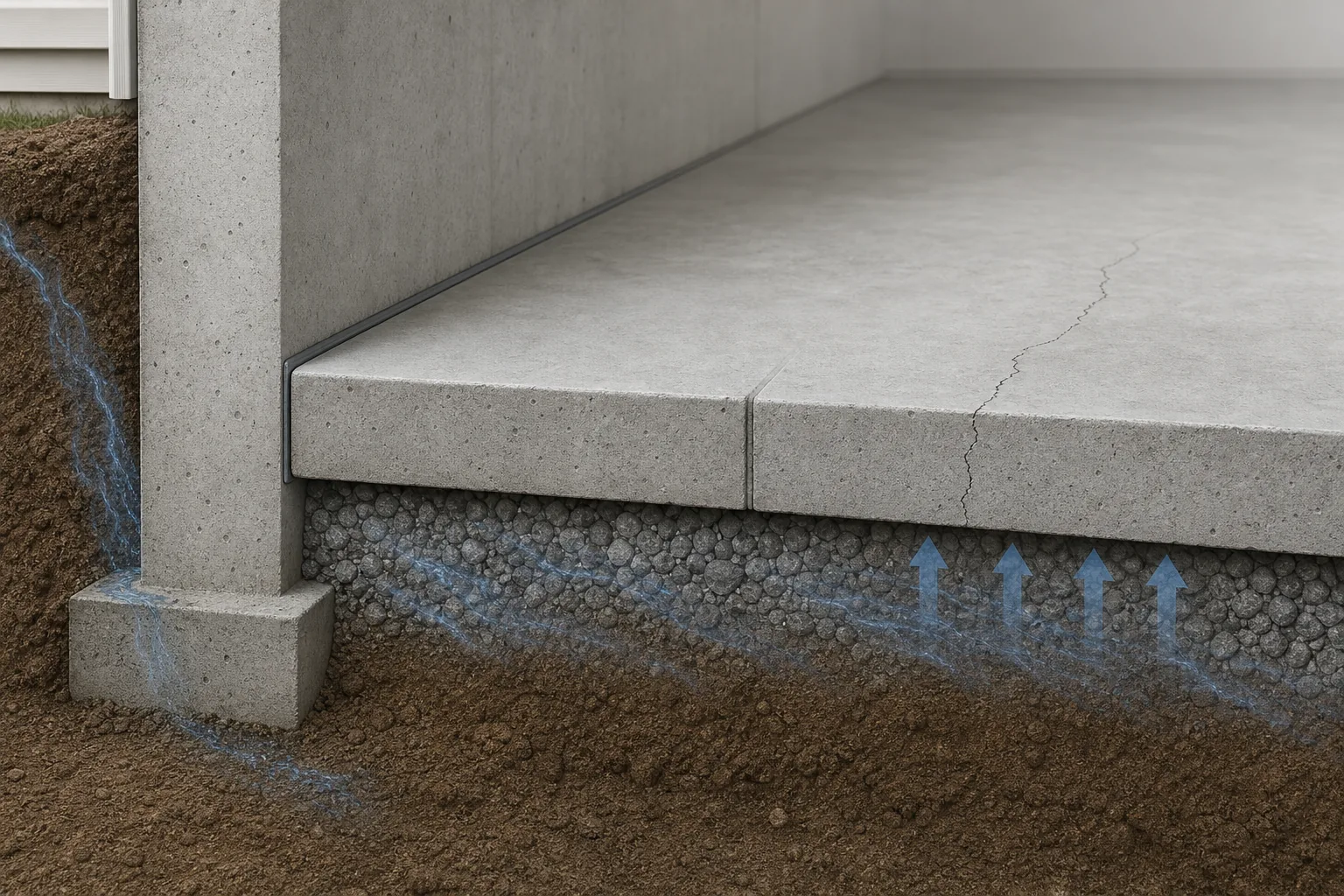
Start by noting the location: near the wall-floor joint, a support post, a drain, or the center of the room. Then look across both edges in low-angle light. A visible height difference or fresh-looking edges are useful observations to record, not a diagnosis.
Concrete changes volume as it cures and loses moisture, which can create a narrow, irregular crack. A dry, flat crack that does not change is more consistent with this pattern than a crack that turns damp after rain.
Check: Photograph it now from the same angle you can repeat later.
A control joint is a planned groove that gives concrete a preferred place to crack as it contracts. The American Cement Association notes that concrete contracts as it hardens and that joints are used to control cracking. A crack near a joint may reflect that movement pattern.
Check: Sketch the crack and nearby grooves so an inspector can see the slab layout.
If support beneath a floor changes in one area, a slab can crack as it bends or settles. This possibility is worth noting when a crack is near a post base, a former trench, or a spot that looks uneven.
Check: Lay a straight board across the area and photograph any visible change in plane.
Water in soil beneath a basement can create pressure against floor and wall areas. A crack that darkens, feels damp, or becomes wet after rain is a moisture clue, not proof of the exact route. Water can also show up at the wall-floor joint.
Check: Record the weather and when you first see dampness. This guide explains how hydrostatic pressure causes basement water problems.
Cleveland is in Ohio State Waterproofing’s Northeast Ohio service area. Watch for a crack that repeatedly seems to change across cold-to-warm seasonal transitions; that is a different pattern from one that appears unchanged throughout the year.
Check: Compare dated photos across seasons rather than relying on memory.
A heavy stored item, rolling equipment, or a hard impact can damage a vulnerable area. This is more plausible when the crack is localized where a load or impact occurred, and less so when the crack becomes wet after storms.
Check: Move stored items off the area where practical and keep the floor visible.
A perimeter crack can relate to the joint where the slab meets the wall. If it is paired with a new wall crack, bowing, or a floor that no longer looks level, the question is broader than the slab surface. See Ohio State Waterproofing’s guide to foundation wall crack types.
Check: Take wide photos that show the floor, wall, and where they meet.
Use these clues to choose a sensible first response. No single observation identifies the cause; together, they make a more useful record.
Basement floor crack clues and the best first response
Dark spots on a concrete floor may be dampness, old staining, or a surface condition. If spots appear or deepen after rain, photograph them before they dry. A white powdery residue can be associated with moisture carrying mineral salts to the surface, but it does not establish where water began.
A floor crack needs more attention when it is repeatedly wet, has a damp line beside it, or coincides with water at the room perimeter. Do not treat a wet crack as a cosmetic patch before the moisture pattern has been evaluated; covering it can make changes harder to see.
Check that gutters are clear, downspouts direct water away from the house, and grading does not direct runoff toward the basement wall. Keep belongings off the floor while you observe the area. For more context, see Why Basement Floors Start Seeping Water and Ohio State Waterproofing’s basement waterproofing in Cleveland page.
When wall cracks, visible bowing, sticking doors, or a noticeable floor-height change appear nearby, treat the floor crack as part of a larger observation. Those signs do not automatically identify a structural problem, but they make a quick cosmetic conclusion less useful. For wall-specific context, read Structural vs. Cosmetic Foundation Cracks.
Request a professional evaluation when a basement floor crack is growing, repeatedly wet, offset, or paired with wall cracks, bowing, or a changing floor level. Dated photos and weather notes can help connect the indoor symptom with outdoor conditions. For help with an issue that needs repair, review Ohio State Waterproofing’s basement and foundation crack repair service.
They often result from normal concrete shrinkage when they are dry, flat, and unchanged. Monitor them, and arrange an evaluation if they change, become wet, or appear with other symptoms.
Shrinkage, joint layout, changing support below the slab, moisture conditions, and loads are possible factors. Timing alone does not identify the cause.
A crack can be where water becomes visible, especially when it darkens or gets wet after rain. It may not be the only route or the original source.
A height difference is a reason to look beyond a simple surface crack. Document the area and have it evaluated, particularly when wall cracks or moisture signs are nearby.
Avoid treating a wet, offset, or growing crack as a simple cosmetic project until the moisture or movement pattern has been assessed.
Schedule a free inspection with Ohio State Waterproofing to discuss the crack pattern, moisture signs, and next practical step for your basement.
Schedule Your Free Inspection
The American Concrete Institute explains that concrete floor slabs shrink as they dry and cool, and that even well-designed floors can develop some cracking. That fact alone cannot explain a particular crack, so look at its location, condition, and changes over time.
Are cracks in basement floor concrete normal?
Often, yes. A thin, dry crack that stays the same and lies flat on both sides can be consistent with normal slab shrinkage. Basement slabs commonly sit over prepared material and are separate from the foundation walls, but a floor crack deserves closer attention when it is wet, offset, growing, or paired with wall symptoms.
Start by noting the location: near the wall-floor joint, a support post, a drain, or the center of the room. Then look across both edges in low-angle light. A visible height difference or fresh-looking edges are useful observations to record, not a diagnosis.
7 causes of cracks in basement floor
1. Normal drying shrinkage
Concrete changes volume as it cures and loses moisture, which can create a narrow, irregular crack. A dry, flat crack that does not change is more consistent with this pattern than a crack that turns damp after rain.
Check: Photograph it now from the same angle you can repeat later.
2. Control joints did not guide the movement
A control joint is a planned groove that gives concrete a preferred place to crack as it contracts. The American Cement Association notes that concrete contracts as it hardens and that joints are used to control cracking. A crack near a joint may reflect that movement pattern.
Check: Sketch the crack and nearby grooves so an inspector can see the slab layout.
3. Uneven support below the slab
If support beneath a floor changes in one area, a slab can crack as it bends or settles. This possibility is worth noting when a crack is near a post base, a former trench, or a spot that looks uneven.
Check: Lay a straight board across the area and photograph any visible change in plane.
4. Moisture pressure below the floor
Water in soil beneath a basement can create pressure against floor and wall areas. A crack that darkens, feels damp, or becomes wet after rain is a moisture clue, not proof of the exact route. Water can also show up at the wall-floor joint.
Check: Record the weather and when you first see dampness. This guide explains how hydrostatic pressure causes basement water problems.
5. Seasonal movement around the home
Cleveland is in Ohio State Waterproofing’s Northeast Ohio service area. Watch for a crack that repeatedly seems to change across cold-to-warm seasonal transitions; that is a different pattern from one that appears unchanged throughout the year.
Check: Compare dated photos across seasons rather than relying on memory.
6. Heavy loads or impact
A heavy stored item, rolling equipment, or a hard impact can damage a vulnerable area. This is more plausible when the crack is localized where a load or impact occurred, and less so when the crack becomes wet after storms.
Check: Move stored items off the area where practical and keep the floor visible.
7. Movement at the wall-floor connection
A perimeter crack can relate to the joint where the slab meets the wall. If it is paired with a new wall crack, bowing, or a floor that no longer looks level, the question is broader than the slab surface. See Ohio State Waterproofing’s guide to foundation wall crack types.
Check: Take wide photos that show the floor, wall, and where they meet.
How to read a floor crack before deciding what to do
Use these clues to choose a sensible first response. No single observation identifies the cause; together, they make a more useful record.
| What you notice | What to check next | What it can suggest | First response |
|---|---|---|---|
| Fine, dry, flat line | Compare dated photos | Shrinkage or normal slab movement | Monitor and keep it visible |
| Crack darkens after rain | Check timing and nearby joints | Moisture may be reaching the area | Document it; assess drainage |
| One edge is higher | Look for uneven floor nearby | Slab movement or changing support | Arrange an inspection |
| Crack is growing or branching | Mark ends and date photos | Ongoing movement needs evaluation | Arrange an inspection |
| Floor and wall symptoms together | Photograph the full area | A broader movement or water issue | Arrange an inspection |
Basement floor crack clues and the best first response
Dark spots on a concrete floor may be dampness, old staining, or a surface condition. If spots appear or deepen after rain, photograph them before they dry. A white powdery residue can be associated with moisture carrying mineral salts to the surface, but it does not establish where water began.
When a floor crack means water is getting in
A floor crack needs more attention when it is repeatedly wet, has a damp line beside it, or coincides with water at the room perimeter. Do not treat a wet crack as a cosmetic patch before the moisture pattern has been evaluated; covering it can make changes harder to see.
Check that gutters are clear, downspouts direct water away from the house, and grading does not direct runoff toward the basement wall. Keep belongings off the floor while you observe the area. For more context, see Why Basement Floors Start Seeping Water and Ohio State Waterproofing’s basement waterproofing in Cleveland page.
Floor crack plus wall crack, bowing wall, or uneven floor
When wall cracks, visible bowing, sticking doors, or a noticeable floor-height change appear nearby, treat the floor crack as part of a larger observation. Those signs do not automatically identify a structural problem, but they make a quick cosmetic conclusion less useful. For wall-specific context, read Structural vs. Cosmetic Foundation Cracks.
What to do this week
- Photograph the crack with a ruler for your own comparison and date the photo.
- Mark the visible ends lightly in pencil so you can see whether it extends.
- Record moisture conditions, including rain, snowmelt, darkening, or water near the wall-floor joint.
- Move boxes off the floor to protect belongings and keep the area visible.
- Check water management outside: gutters, downspouts, and soil slope.
- Avoid hiding a wet or changing crack until the moisture or movement pattern is evaluated.
When to call a professional
Request a professional evaluation when a basement floor crack is growing, repeatedly wet, offset, or paired with wall cracks, bowing, or a changing floor level. Dated photos and weather notes can help connect the indoor symptom with outdoor conditions. For help with an issue that needs repair, review Ohio State Waterproofing’s basement and foundation crack repair service.
Sources for factual claims
- The American Concrete Institute’s floor and slab guide explains concrete volume change, joints, and why completely crack-free concrete floors are unrealistic.
- The American Cement Association’s concrete guidance explains that hardening concrete contracts and joints are used to control cracking.
Frequently asked questions
Are hairline cracks in a basement floor normal?
They often result from normal concrete shrinkage when they are dry, flat, and unchanged. Monitor them, and arrange an evaluation if they change, become wet, or appear with other symptoms.
Why is my basement floor cracking after only a few years?
Shrinkage, joint layout, changing support below the slab, moisture conditions, and loads are possible factors. Timing alone does not identify the cause.
Can a crack in the basement floor let water in?
A crack can be where water becomes visible, especially when it darkens or gets wet after rain. It may not be the only route or the original source.
What does it mean when one side of a basement floor crack is higher than the other?
A height difference is a reason to look beyond a simple surface crack. Document the area and have it evaluated, particularly when wall cracks or moisture signs are nearby.
Should I seal a crack in my basement floor myself?
Avoid treating a wet, offset, or growing crack as a simple cosmetic project until the moisture or movement pattern has been assessed.
Concerned About Cracks in Your Basement Floor?
Schedule a free inspection with Ohio State Waterproofing to discuss the crack pattern, moisture signs, and next practical step for your basement.
Schedule Your Free Inspection