H
HermesBot
Guest
- Thread Author
- #1
A window well drain that stays full after rain deserves attention, especially when the water level approaches the basement window. In Cleveland, fallen leaves, heavy rain, snowmelt, and frozen ground can all slow drainage. Start by clearing visible debris and watching where surface water goes; repeated standing water or a leaking basement window calls for a closer look at the well and the drainage around it.
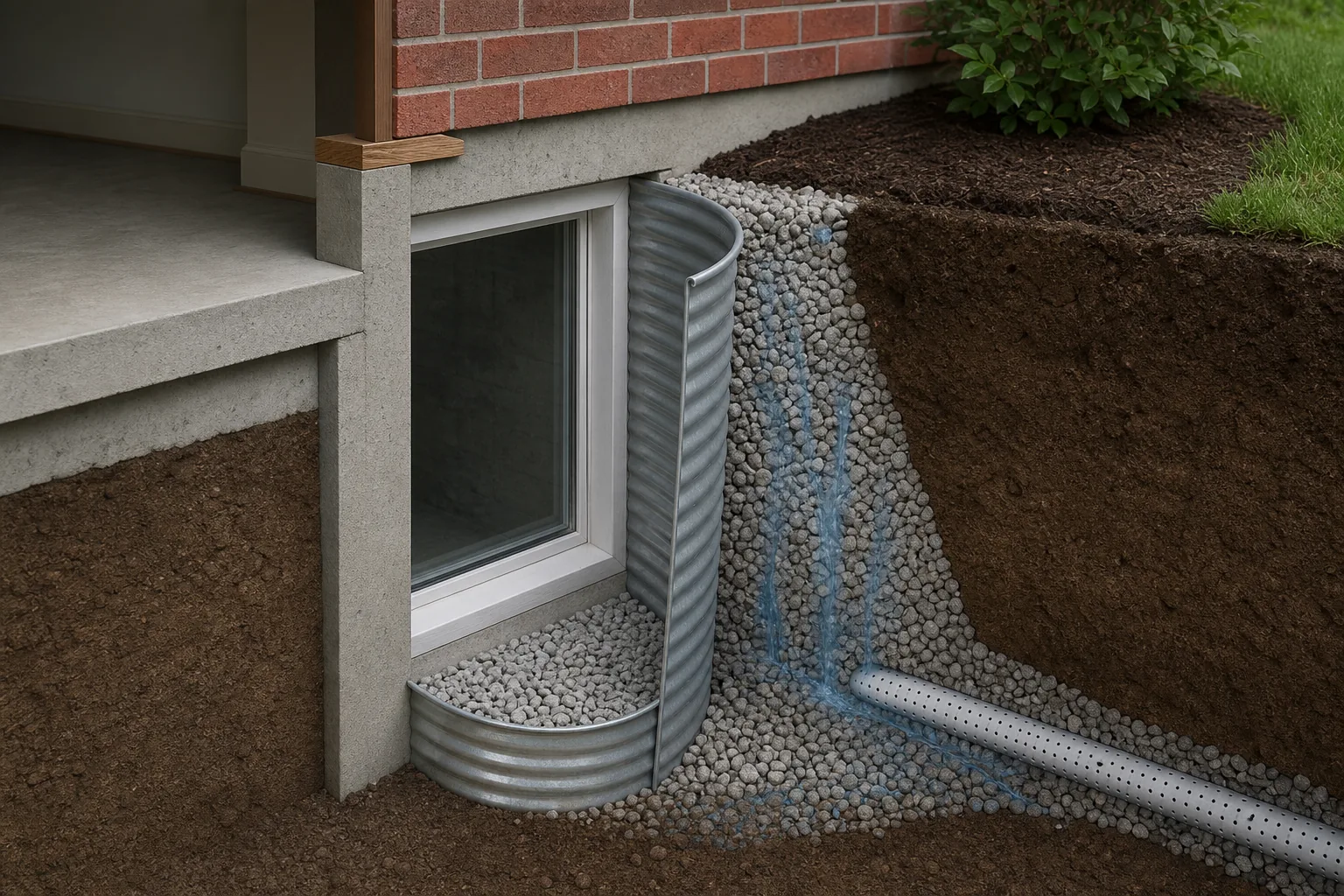
A window well creates space and light around a below-grade window. Gravel at the base helps rainwater move down, and some wells also connect to a foundation drainage route.
Older homes vary: a well can have buried gravel, no visible drain, or drainage that no longer moves freely. A brief fill during a hard storm is not proof of a foundation failure. The concern is water that remains after the yard drains or reaches the window.
Watch the pattern. Water that is visibly dropping after a storm differs from water that stays ponded, returns in dry weather, or rises whenever a downspout runs. In Cleveland, fall leaves and winter thaws offer useful clues: debris can blanket gravel, and frozen soil can slow meltwater temporarily.
What a full window well can indicate—and the best first response
Leaves, mulch, and silt can mat over gravel. This is likely after fall leaf drop when the gravel is hard to see.
How to tell it apart: The blockage is visible at the top, and the water may begin dropping after debris is removed.
What to do: Wearing gloves, lift out loose leaves and twigs. Do not push debris down or probe deeply. Regular gutter cleaning also reduces nearby buildup.
A drain connection can be hidden beneath gravel. It may clog with sediment, shift, become crushed, or lead nowhere useful.
How to tell it apart: Debris is cleared, but water remains long after the yard is dry.
What to do: Do not dig beside the window or force a hose into an unknown drain. A professional can evaluate the well and outlet.
Soil and fine sediment can fill the open spaces in gravel and create a dense bowl.
How to tell it apart: The base looks muddy or soil-filled, and clearing the top does not restore drainage.
What to do: Do not excavate beside the window. Have the base and drainage path assessed.
A well drain can be overwhelmed when a downspout empties nearby or the ground slopes toward the foundation.
How to tell it apart: The well fills fastest while a nearby downspout flows, or nearby soil stays saturated.
What to do: Check that downspout discharge is directed away from the foundation and that loose soil has not created a trough toward the well. Read more about how roof downspouts affect basement waterproofing and the link between clogged gutters and basement flooding.
During a Northeast Ohio thaw, meltwater can reach the well while frozen soil limits drainage. Ice can cover gravel or an exterior outlet.
How to tell it apart: It begins during a thaw and improves when temperatures rise. If water remains after thawed conditions return, look for another cause.
What to do: Remove only loose surface debris. Do not chip aggressively near the window, pour chemicals into the well, or force frozen piping. See how freeze-thaw cycles affect foundations for broader seasonal context.
When soil around the foundation is saturated, water pressure can move water through the ground and into low areas.
How to tell it apart: The well fills from below or stays wet after surface runoff is controlled, sometimes with other basement moisture concerns.
What to do: This is not a surface-cleanup issue. An inspection can determine whether exterior conditions, foundation drainage, or an interior drainage system should be considered. For context, see how hydrostatic pressure causes basement water problems.
A full well puts water against the glass, frame, and wall opening, creating an opportunity for a basement window leaking problem. It does not identify the entry point by itself.
Look indoors for water on the sill or dampness below the opening. Take a photo from a safe, dry spot. Do not remove a window, seal a wet opening, or climb into a flooded well. If water enters, move stored items if safe and arrange an inspection.
These simple checks help reduce avoidable surface water without guessing at buried drainage:
A cover may reduce leaves and direct rainfall, but it is not a substitute for drainage. Avoid treating the symptom while the base stays clogged or roof water still targets the well.
Call a professional when a window well repeatedly floods, water remains after normal surface drainage has improved, the gravel base appears buried or compacted, or water reaches the basement window. Professional evaluation is also appropriate when you suspect a buried drain problem or water is appearing elsewhere in the basement.
Ohio State Waterproofing serves Cleveland and Northeast Ohio homeowners with basement waterproofing, foundation repair, crawl space encapsulation, and basement crack repair.
It depends on the home and the well design. A gravel base can help water drain into the soil, while some wells connect to a drainage route. If water repeatedly stands in the well, have the design and its drainage path evaluated rather than assuming a drain is present or working.
Common causes include leaves or soil blocking the base, roof runoff directed toward the well, poor grading, a clogged or damaged drain, and saturated or frozen soil. Watch the timing: water that rises with a downspout suggests surface runoff, while water that lingers after the yard drains suggests a base or drainage issue.
You can remove loose leaves and debris from the surface. Do not force a tool or hose into a buried drain or dig beside the window, because you may compact material or damage an unknown connection. Repeated standing water is a reason for a professional drainage assessment.
Yes, high water against a window and its surrounding opening can find a vulnerable path inside. The water level alone does not reveal whether the issue is the window, the well drainage, or both, so documenting the conditions helps an inspector narrow it down.
A properly selected cover can help keep leaves and direct precipitation out, but it will not correct a blocked base or drainage issue. Keep it clear and do not use it in a way that obstructs an emergency escape opening; local requirements can vary.
Schedule a free inspection to discuss repeated window well flooding or water near a basement window.
Schedule a Free Inspection
Does a window well drain need to be there—and how does it work?
A window well creates space and light around a below-grade window. Gravel at the base helps rainwater move down, and some wells also connect to a foundation drainage route.
Older homes vary: a well can have buried gravel, no visible drain, or drainage that no longer moves freely. A brief fill during a hard storm is not proof of a foundation failure. The concern is water that remains after the yard drains or reaches the window.
What a window well filled with water is telling you
Watch the pattern. Water that is visibly dropping after a storm differs from water that stays ponded, returns in dry weather, or rises whenever a downspout runs. In Cleveland, fall leaves and winter thaws offer useful clues: debris can blanket gravel, and frozen soil can slow meltwater temporarily.
| What you see | Likely place to check | Safe first action |
|---|---|---|
| Leaves cover the gravel | Surface debris | Remove loose leaves by hand |
| Water drops slowly after rain | Gravel or buried drain | Clear debris; monitor after drying |
| Water rises during roof runoff | Downspout route | Redirect runoff away from the well |
| Water remains after the yard dries | Drain connection or compacted base | Arrange a drainage inspection |
| Water touches the window | Window and drainage system | Document conditions; seek prompt help |
| Winter ice holds meltwater | Frozen soil or outlet | Do not force ice; reassess after thaw |
What a full window well can indicate—and the best first response
6 causes of a window well that will not drain
1. Leaves, mulch, and silt are blocking the surface
Leaves, mulch, and silt can mat over gravel. This is likely after fall leaf drop when the gravel is hard to see.
How to tell it apart: The blockage is visible at the top, and the water may begin dropping after debris is removed.
What to do: Wearing gloves, lift out loose leaves and twigs. Do not push debris down or probe deeply. Regular gutter cleaning also reduces nearby buildup.
2. The well drain is missing, clogged, disconnected, or damaged
A drain connection can be hidden beneath gravel. It may clog with sediment, shift, become crushed, or lead nowhere useful.
How to tell it apart: Debris is cleared, but water remains long after the yard is dry.
What to do: Do not dig beside the window or force a hose into an unknown drain. A professional can evaluate the well and outlet.
3. The gravel base has filled with soil or compacted
Soil and fine sediment can fill the open spaces in gravel and create a dense bowl.
How to tell it apart: The base looks muddy or soil-filled, and clearing the top does not restore drainage.
What to do: Do not excavate beside the window. Have the base and drainage path assessed.
4. Downspouts or grading are sending water toward the well
A well drain can be overwhelmed when a downspout empties nearby or the ground slopes toward the foundation.
How to tell it apart: The well fills fastest while a nearby downspout flows, or nearby soil stays saturated.
What to do: Check that downspout discharge is directed away from the foundation and that loose soil has not created a trough toward the well. Read more about how roof downspouts affect basement waterproofing and the link between clogged gutters and basement flooding.
5. Frozen ground or ice is holding water in the well
During a Northeast Ohio thaw, meltwater can reach the well while frozen soil limits drainage. Ice can cover gravel or an exterior outlet.
How to tell it apart: It begins during a thaw and improves when temperatures rise. If water remains after thawed conditions return, look for another cause.
What to do: Remove only loose surface debris. Do not chip aggressively near the window, pour chemicals into the well, or force frozen piping. See how freeze-thaw cycles affect foundations for broader seasonal context.
6. Groundwater pressure is reaching the well from below
When soil around the foundation is saturated, water pressure can move water through the ground and into low areas.
How to tell it apart: The well fills from below or stays wet after surface runoff is controlled, sometimes with other basement moisture concerns.
What to do: This is not a surface-cleanup issue. An inspection can determine whether exterior conditions, foundation drainage, or an interior drainage system should be considered. For context, see how hydrostatic pressure causes basement water problems.
When the water reaches the basement window
A full well puts water against the glass, frame, and wall opening, creating an opportunity for a basement window leaking problem. It does not identify the entry point by itself.
Look indoors for water on the sill or dampness below the opening. Take a photo from a safe, dry spot. Do not remove a window, seal a wet opening, or climb into a flooded well. If water enters, move stored items if safe and arrange an inspection.
What you can safely do this week
These simple checks help reduce avoidable surface water without guessing at buried drainage:
- Clear leaves, litter, and loose soil from the top of the well and nearby gutter outlet.
- Confirm that roof runoff does not empty beside the well; correct obvious surface routing issues.
- After the next rain, note how high the water gets and how long it takes to recede.
- Keep a cover, if you use one, clear of debris and positioned so it does not trap runoff. If the window serves as an emergency escape opening, do not obstruct it; confirm local requirements before changing the well or cover.
A cover may reduce leaves and direct rainfall, but it is not a substitute for drainage. Avoid treating the symptom while the base stays clogged or roof water still targets the well.
When to call a professional
Call a professional when a window well repeatedly floods, water remains after normal surface drainage has improved, the gravel base appears buried or compacted, or water reaches the basement window. Professional evaluation is also appropriate when you suspect a buried drain problem or water is appearing elsewhere in the basement.
Ohio State Waterproofing serves Cleveland and Northeast Ohio homeowners with basement waterproofing, foundation repair, crawl space encapsulation, and basement crack repair.
Frequently asked questions
Does a window well need a drain?
It depends on the home and the well design. A gravel base can help water drain into the soil, while some wells connect to a drainage route. If water repeatedly stands in the well, have the design and its drainage path evaluated rather than assuming a drain is present or working.
Why does my window well fill with water when it rains?
Common causes include leaves or soil blocking the base, roof runoff directed toward the well, poor grading, a clogged or damaged drain, and saturated or frozen soil. Watch the timing: water that rises with a downspout suggests surface runoff, while water that lingers after the yard drains suggests a base or drainage issue.
How do I unclog a window well drain?
You can remove loose leaves and debris from the surface. Do not force a tool or hose into a buried drain or dig beside the window, because you may compact material or damage an unknown connection. Repeated standing water is a reason for a professional drainage assessment.
Can a full window well leak into my basement?
Yes, high water against a window and its surrounding opening can find a vulnerable path inside. The water level alone does not reveal whether the issue is the window, the well drainage, or both, so documenting the conditions helps an inspector narrow it down.
Should I put a cover on my window well in winter?
A properly selected cover can help keep leaves and direct precipitation out, but it will not correct a blocked base or drainage issue. Keep it clear and do not use it in a way that obstructs an emergency escape opening; local requirements can vary.
Get Help With Window Well Drain Problems
Schedule a free inspection to discuss repeated window well flooding or water near a basement window.
Schedule a Free Inspection