
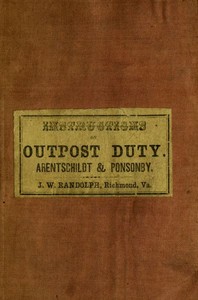
Instructions for Officers and Non-Commissioned Officers of Cavalry, on Outpost…
Let's be clear: this is not a novel. You won't find a dashing hero with a complicated love life. 'Instructions for Outpost Duty' is a field manual, written in 1854 by Alexander von Arentschildt, a Prussian cavalry officer with real experience. It was meant to be stuffed in a saddlebag, its pages getting dirty as young officers tried to keep their men alive on the perimeter of an army.
The Story
There's no traditional plot, but there is a powerful narrative in its instructions. The 'story' it tells is one of immense pressure and minute detail. Von Arentschildt walks you through everything: how to pick the best spot for an observation post (high ground, clear lines of sight), how to post your sentries so they can't all be captured at once, and how to handle the terrifying moment of contact with the enemy. He explains how to send a clear, urgent message back to headquarters and how to conduct a fighting retreat if you're overwhelmed. The drama is in the scenarios—what to do at night, in heavy rain, or if you suspect the enemy is using the local woods for cover. The entire book is a guide to maintaining a fragile, invisible shield around an army.
Why You Should Read It
I loved this book because it completely changed how I see military history. We always focus on the big battles, but this shows the exhausting, critical work that makes those battles possible. Von Arentschildt's voice is direct and no-nonsense, but you can feel his obsession with preventing needless death. His advice is deeply human: he stresses the importance of keeping your men dry and fed, because a cold, hungry soldier can't stay alert. He warns against the monotony of guard duty, knowing that boredom is as dangerous as the enemy. Reading it, you gain a huge respect for the sheer mental stamina and leadership required for this unglamorous job. It’s a masterclass in practical leadership under stress.
Final Verdict
This is a niche gem, but a brilliant one. It's perfect for history buffs, military enthusiasts, or writers looking for authentic detail about 19th-century warfare. If you've ever enjoyed a Bernard Cornwell novel or a detailed historical documentary, this manual provides the true-blue foundation those stories are built on. It’s not a casual beach read, but for the right reader, it’s absolutely gripping. You get to peer over the shoulder of a professional from another time and learn his life-or-death craft.
Logan Taylor
1 year agoI had low expectations initially, however it provides a comprehensive overview perfect for everyone. I will read more from this author.
Mason Martin
7 months agoUsed this for my thesis, incredibly useful.








Patricia Lopez
1 year agoI came across this while browsing and it challenges the reader's perspective in an intellectual way. Truly inspiring.