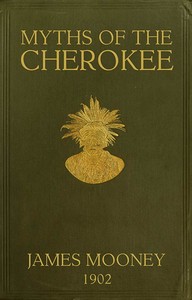
Myths of the Cherokee by James Mooney
This isn't a book with a traditional plot. Think of it instead as a carefully gathered collection of voices. James Mooney spent years with the Eastern Band of Cherokee in North Carolina in the 1880s and 90s. His job was to listen. The 'story' here is the unfolding of an entire belief system, from the very beginning to the everyday.
The Story
The book starts with the big picture: how the world was created, how animals and people came to be, and the adventures of legendary figures. Then it moves into the smaller, but just as important, stories that explain why possums have bald tails, how fire was stolen, and the origins of medicine and rituals. Finally, it includes sacred formulas, prayers, and descriptions of ceremonies. It's a full tour of Cherokee spiritual life, told in their own words (through Mooney's translation). The narrative thread is the journey of a culture explaining itself and its place in the universe.
Why You Should Read It
I picked this up thinking I'd get some nice folk tales. I was not prepared for the depth, humor, and sheer creativity. These stories are alive. You meet Rabbit, the clever trickster who often outsmarts himself. You feel the power of the Uktena, a giant serpent. The creation stories are particularly gripping—they're complex and layered, not simple fables. What hit me hardest was the sense of a complete, logical, and beautiful way of seeing the world that is entirely its own. It makes you realize how much rich thought and tradition existed here long before European settlers arrived. Reading it feels like an act of preservation, like you're helping to carry these stories forward.
Final Verdict
Perfect for anyone curious about mythology, American history, or Indigenous cultures. It's a must-read for writers looking for original, non-European mythic inspiration. If you love folklore collections from any culture, you'll adore this. A word of caution: it's a primary source from the 19th century, so the language and some of Mooney's framing can feel dated. But push through that—the stories themselves are timeless. This isn't a fast-paced novel; it's a book to savor, a piece of living history you can hold in your hands.