
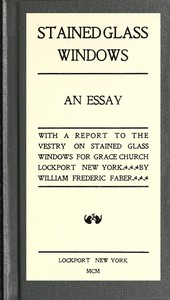
Stained Glass Windows: An Essay: With a Report to the Vestry on Stained Glass…
Okay, let's be clear: this isn't a novel. It's a slim volume from 1900 containing two parts. First, there's the 'Essay' itself, where Reverend Faber makes his case. He's not a fan of the overly sentimental, storybook-style stained glass that was popular in some Victorian churches. He argues fiercely for windows that are more symbolic, more about creating a mood of reverence than just illustrating Bible scenes. He talks about color, light, and how glass should make you feel the divine, not just read about it.
The Story
The 'story' here is the debate. The essay is Faber's opening statement. The real action is in the second part: the 'Report to the Vestry.' Think of the vestry as the church's board of directors. This report details the actual, practical arguments for choosing one artist's design over another. It's about money, taste, theology, and community opinion. We hear about competing bids from glassmakers, concerns over whether a design is 'churchly' enough, and the struggle to balance artistic vision with what the congregation will accept. It's the messy, human paperwork behind what we now see as timeless art.
Why You Should Read It
I loved this because it makes the past feel immediate. We often see old churches as finished monuments, but this book shows them as works-in-progress, full of the same disagreements any community project has today. Faber's passion is contagious, even if you don't agree with his artistic preferences. You get a real sense of how seriously people took their visual environment and how much meaning they poured into every color and symbol. It turns a walk through an old church from a quiet tour into a detective game, wondering, 'What arguments happened before this window was installed?'
Final Verdict
This is a niche gem, but a brilliant one. It's perfect for history buffs who like social history, art lovers curious about the 'why' behind beautiful things, or anyone involved in their own local church or community building projects. You'll see that committee meetings about aesthetics are nothing new! It's not a casual beach read, but for the right reader, it's a fascinating, short dive into a world where faith, art, and community politics collide in a burst of colored light.
Linda Young
1 year agoVery helpful, thanks.

Jennifer Wright
5 months agoI came across this while browsing and the plot twists are genuinely surprising. A valuable addition to my collection.