
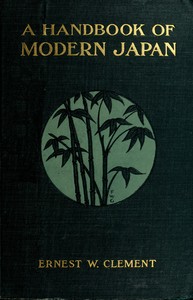
A Handbook of Modern Japan by Ernest W. Clement
Published in 1903, Ernest Clement's A Handbook of Modern Japan is exactly what it sounds like: a guide. But it's a guide to a country that was changing so fast, the ink was probably still drying on some of the laws he describes. Clement, an American educator and journalist living in Japan, wrote this to explain the Meiji Era's rapid modernization to a curious Western audience.
The Story
There isn't a plot in the novel sense. Instead, Clement takes us on a structured tour of a nation rebuilding itself. He starts with the basics—geography, population, a bit of recent history—to set the stage. Then, he dives into the machinery of the new Japan: its government, legal system, and modern military. The middle sections get into the heart of daily life and progress, covering education, religion, finance, and industry. He explains how they set up a postal service, built railways, and established banks. He even includes practical advice for travelers and a list of important dates in the new Western-style calendar Japan had recently adopted. The book is a systematic, almost urgent, effort to document a society in flux.
Why You Should Read It
The magic here isn't in thrilling narrative, but in perspective. Reading this is like sitting with a sharp, well-informed observer from 1903. You see Japan through his eyes at a pivotal moment—after it had opened up to the world and decided to master Western ways to ensure its survival. His tone is often admiring of their achievements. What's truly compelling is comparing his snapshot to what we know happened next. When he talks about Japan's growing industrial power or its new role in international politics, you're reading the groundwork for the 20th century. It makes history feel immediate, not like a distant fact in a textbook.
Final Verdict
This isn't a beach read. It's perfect for history buffs, Japan enthusiasts, or anyone curious about how nations transform. If you've ever wondered what it was like to witness the 'opening' of Japan not as a historical event, but as a current, ongoing process, this handbook is a unique window. Think of it less as a story and more as a primary source—a conversation with a knowledgeable guide from the past, pointing out all the new construction happening around him.
Paul Anderson
3 months agoHaving read this twice, the pacing is just right, keeping you engaged. A valuable addition to my collection.
Kimberly Harris
1 year agoI have to admit, it challenges the reader's perspective in an intellectual way. A true masterpiece.