
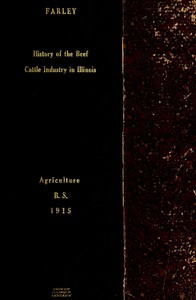
History of the Beef Cattle Industry in Illinois by Frank Webster Farley
Frank Webster Farley's History of the Beef Cattle Industry in Illinois is exactly what the title promises, but it's so much more than a list of dates and breeds. Published in the early 20th century, it captures a pivotal moment—the shift from Illinois as a frontier state to an agricultural powerhouse.
The Story
The book doesn't have a traditional plot with characters, but its narrative is driven by people and change. It starts with the early settlers bringing cattle into the prairie, a tough and risky endeavor. Farley then walks us through the explosive growth of the cattle business after the Civil War, fueled by railroads and the rise of Chicago's stockyards. The real tension comes from the transformation itself. We see the gritty reality of cattle drives giving way to feedlots, and the personal struggles of farmers adapting to new markets and scientific methods. It's the story of an industry finding its feet, with all the boom, bust, and innovation that entailed.
Why You Should Read It
I picked this up expecting a niche reference book, but I was struck by its humanity. Farley had a front-row seat to this history, and his writing, while factual, carries a sense of witness. You feel the pride in a well-bred herd and the anxiety of a price crash. It made me appreciate the sheer scale of effort that went into putting meat on the table a century ago. This isn't just about economics; it's about how a way of life was built, changed, and sometimes lost. Reading it, you understand the deep roots of today's farming communities and the ongoing conversations about food, land, and sustainability.
Final Verdict
This is a must-read for anyone with ties to Illinois or the Midwest, history lovers who enjoy ground-level stories (pun intended), and people curious about where their food really comes from. It's not a light novel—it's a detailed, thoughtful work. But if you have any interest in how America's heartland was shaped, it's absolutely fascinating. Perfect for a patient reader looking to connect with a foundational piece of regional history that still echoes today.
Melissa Scott
1 year agoThis book was worth my time since the storytelling feels authentic and emotionally grounded. This story will stay with me.
Edward Ramirez
1 year agoI had low expectations initially, however the arguments are well-supported by credible references. Exceeded all my expectations.
George Ramirez
10 months agoI came across this while browsing and it manages to explain difficult concepts in plain English. One of the best books I've read this year.
Elizabeth Young
4 months agoPerfect.




Mary Allen
1 year agoHigh quality edition, very readable.